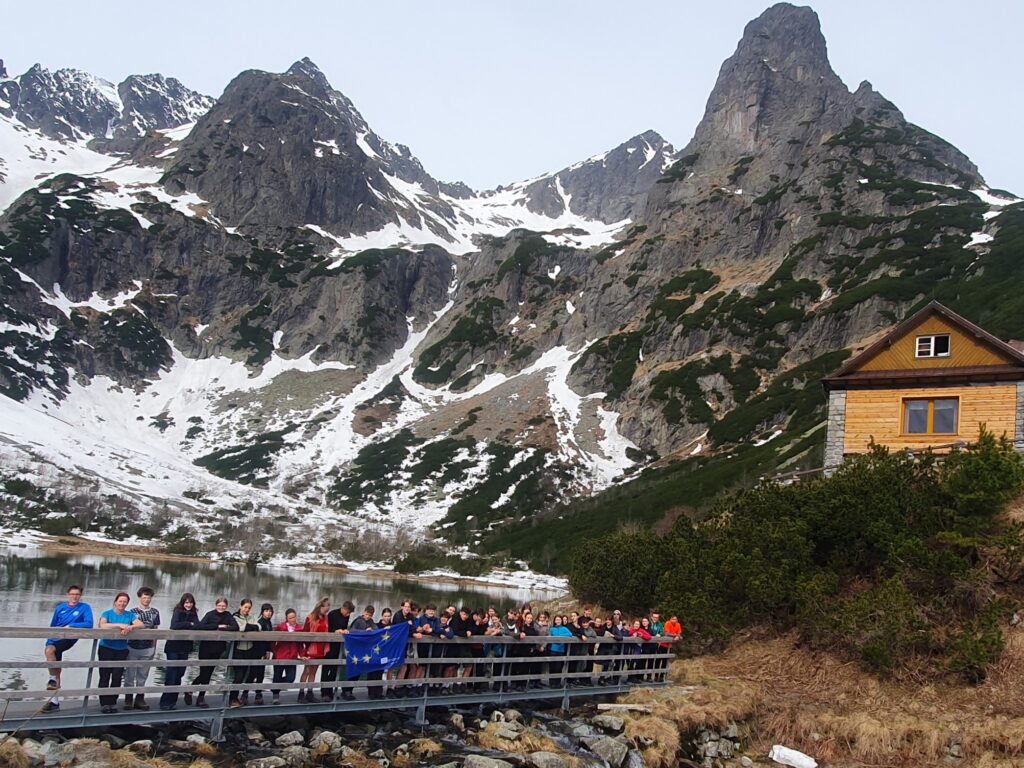
After a hearty breakfast, the students had to say goodbye to the cabin and the beautiful surroundings of the Kežmarská Valley. But before they set off, Mr. Ksiažek set up his binoculars and treated the students to another unforgettable experience. Early that morning, he had been out on an observation mission and spotted marmots digging through the snow and enjoying the springtime fun in the snow. From the opposite hill, Veľká Svišťovka, chamois were watching them. Then, it was time to make their way down to Biela voda, where a bus took them to Tatranská Lomnica. In the park there, the teachers set up the equipment for the following engaging and thought-provoking games:
The Solar System Game and the Transport in Crisis simulation. These exercises were designed to foster a deeper understanding of the roles various stakeholders play in addressing climate change and urban sustainability. Through interactive learning, the groups explored the complexities of environmental decision-making, negotiation, and collective problem-solving. This report outlines key takeaways from these activities, as well as their relevance to real-world challenges.


The Solar System Game aimed to clarify how different authorities and branches influence climate change mitigation and environmental sustainability. Participants were tasked with matching six key stakeholders – Local and Regional Governments, Corporations and Businesses, Financial Institutions, Educational and Research Institutions, Media and Communication Outlets, and Civil Society and Public Movements—to their respective roles and responsibilities in addressing environmental issues.
The simulations were not only educational but also empowering. They provided a practical, hands-on approach to understanding the complexities of climate action and urban sustainability. Students left the Erasmus+ Mobility Week with a stronger sense of agency and a belief that collaborative, inclusive decision-making is key to building a sustainable future. These activities are a testament to the power of experiential learning in fostering critical thinking, negotiation skills, and a sense of shared responsibility – qualities that are essential for addressing the climate challenges of our time. While hiking in the High Tatras was the first mountain experience for many, it certainly wasn’t their last.