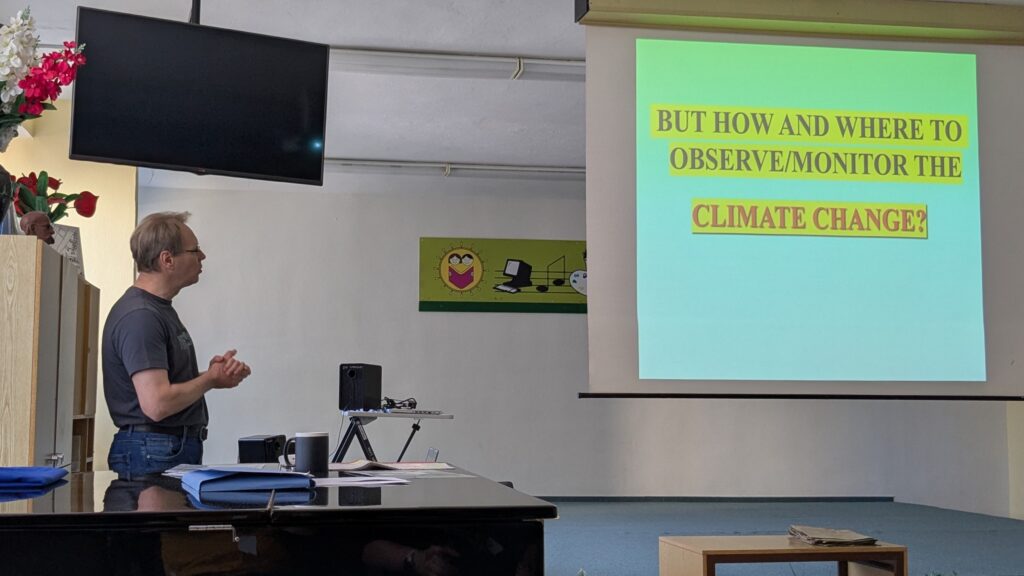
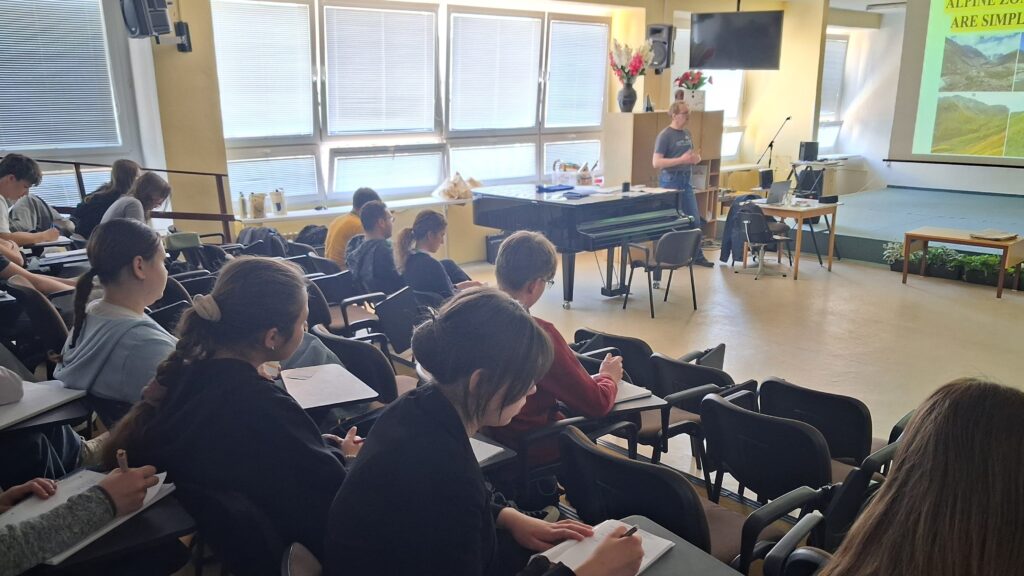
On Mondy morning the school could once again welcome Mr. Dr. Robert Kanka, Ph.D., Head of Department of Ecological Analyses, from the Institute of Landscape Ecology SAS who held a lecture about how vegetation in the Alps changes because of the climate change. What have the students learned? To see climate change, scientists look at wind, rain and temperatures from 1950 to 2005. Since factories and cars became common in 1920, the earth has been getting warmer. But they also study plants, animals and general life in the forest, which is way harder. In the mountains above the trees, it’s pretty simple: There are only small bushes and blueberries at 700 to 800 meters above the ground, which makes measurement easy. Also, mountains are often unaffected by people. However, it’s quite difficult to do the same in forests. When one tree falls, more sunshine can hit the measurement station. That makes the station detect higher temperatures although the climate didn’t change at all. There are also some people who cut down on the trees. Scientists from the GLORIA project check mountain tops every two years. It’s tough to work because of the rain and wind. They mark spots and come back later. They save their data in excel. To do this job you need to:
know a lot about nature
be fit to be able to hike up on the mountain far away from normal pathes
have real warm winter clothes (professional hiking equipement)
They use small machines called loggers to measure soil temperature. The first studies started in 1994. The most interesting results so far:
Species have moved upslope on average
However, these shifts had opposite effects on the summit floras species richness in boreal-temperate mountain regions (+3.9 species on average) and Mediterranean mountain regions (-1,4), probably because recent climatic trends have decreased the availability of water in the European south.
Because Mediterranean mountains are particularly rich in endemic species, a continuation of these trends might shrink the European mountain flora, despite an average increase in summit species richness across the region. In a nutshell, they found out that mountain areas gained +7.7 new plant species, while other areas gained +3.9 new species. This isn’t necessarily good because some plants are also disappearing.
Here you can find the presentation from Mr. Kanka: